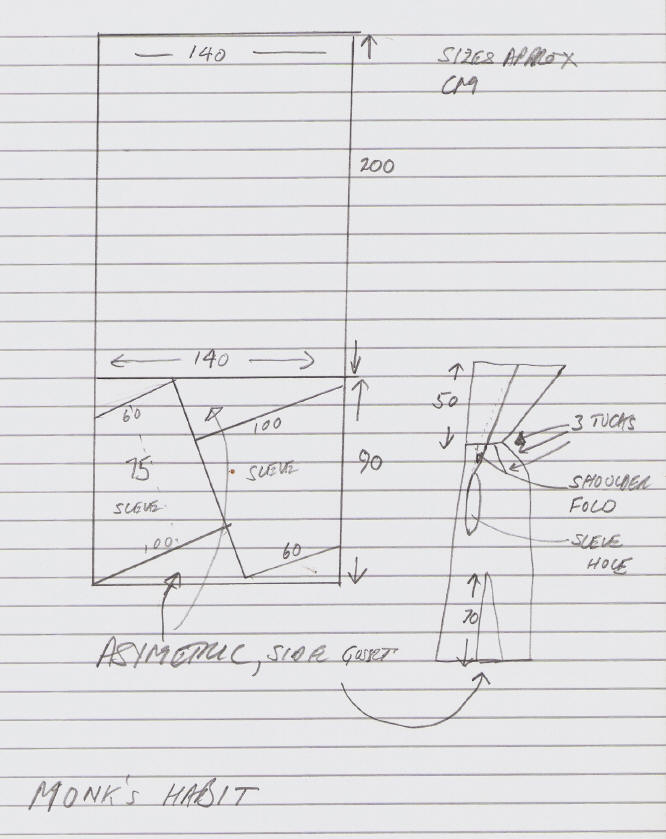
I have had a number of enquiries about the habit's construction so I contribute this rather poor sketch to give some idea of how it was put together. The aim was to minimise cutting and waste as both of these would have guided the original design. after making 4 belt loop, not a scrap of the material was wasted and by unpicking the stitching, the cloth could be reshaped/ recycled for another monk.
I used a material called 'boiled wool' which looks rough but was very comfortable and stood up to the harsh conditions of wet and cold extremely well. This was already dyed brown and might darken it some more next year when I have another crop of woad.
Cutting
Sewing
I added a piece of tablet weaving round the hood and put some belt loops
around the waist plus I hemmed the fringes. The whole thing was given a hot wash
(no detergent) then treated with 'polarproof' from NikWax to prevent the
wool adsorbing water (replacing the lanolin). Subsequent washes have been in hot water using soap, not
detergent.
It sounds a bit smug to say that it worked perfectly and I wouldn't change a thing. It was comfortable. The shoulders stayed in position even when carrying my uncomfortable backpack. The copious cloth for the hood could be folded in a variety of ways to deflect the wind, act as the first line of defence against the rain, make snug pillow/nightcap at night and the folds that followed the construction of the habit made it very easy to give the hood its 'monkish' shape.
The belt meant it could be hitched up for striding out or keeping the hem clear of the vegetation. The sleeves could be folded back and I did consider incorporating a means of tying them back but this did not prove necessary as the folds stayed in place so when it was warm I could have most of my arms exposed.
I hope this helps. The habit was designed for day and night wear so that the wearer would always be ready to rise and serve his god. I found it an extremely comfortable and practical garment which was simple to make.
Good luck!